Small Changes Matter
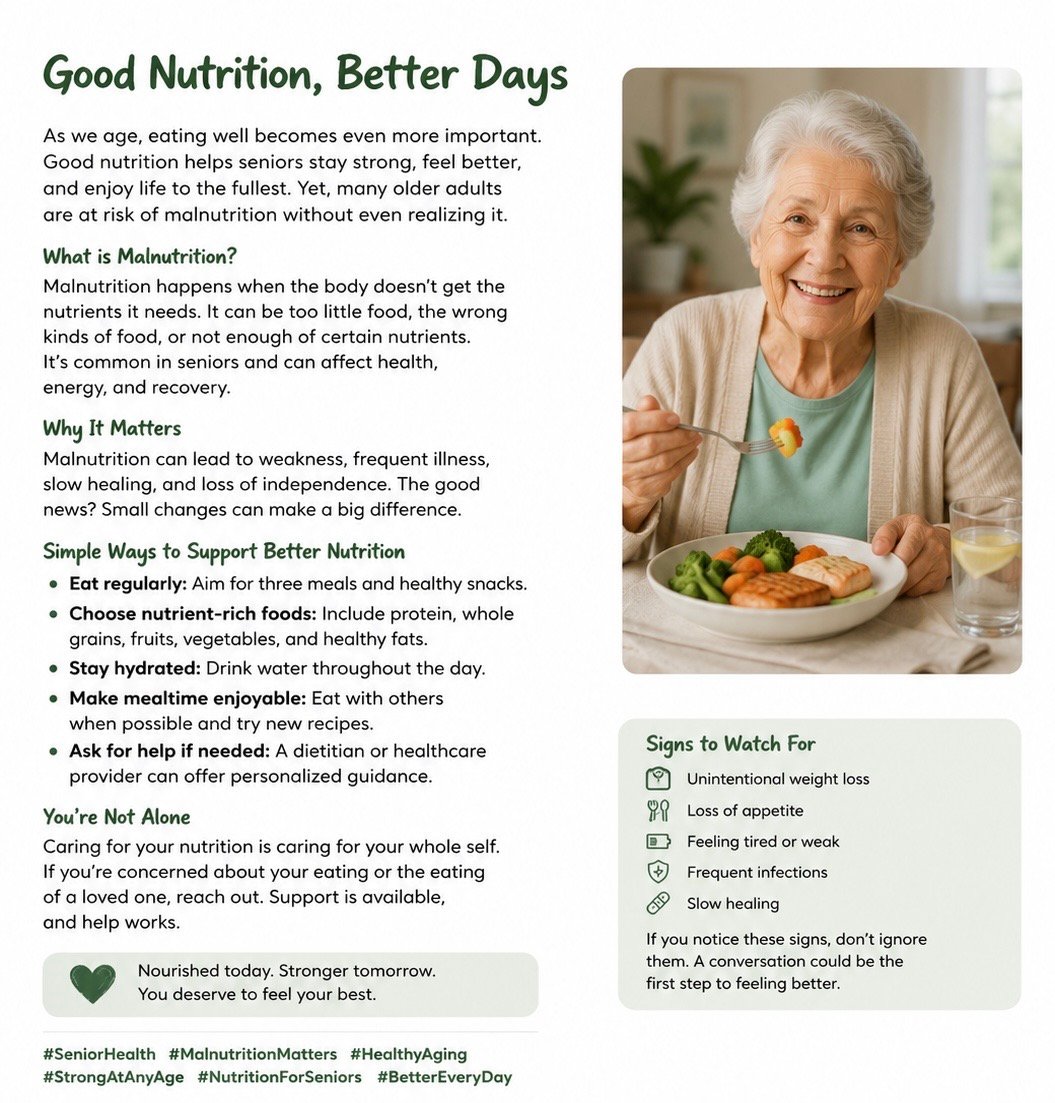
As we grow older, eating well becomes more important than ever. Good nutrition helps us stay active, maintain our strength, heal from illness, and enjoy everyday life.
Unfortunately, many older adults experience malnutrition without realizing it. It is more common than most people think, and it can affect seniors who are living at home as well as those in assisted living or nursing facilities.
The good news is that malnutrition can often be prevented or improved with simple steps.
What Is Malnutrition?
Malnutrition occurs when the body does not receive the calories, protein, vitamins, or minerals it needs to stay healthy.
It does not always mean a person is not eating enough. Sometimes people eat regularly but are not getting the nutrients their bodies need.
Why Are Seniors at Greater Risk?
Several changes that come with aging can make eating well more difficult.
These may include:
- A smaller appetite
- Difficulty chewing or swallowing
- Changes in taste or smell
- Certain medications that affect appetite
- Living alone and cooking less often
- Limited income for healthy food
- Chronic illness or recovery after surgery
Even one or two of these challenges can increase the risk of poor nutrition.
Signs to Watch For
Talk with your healthcare provider if you notice:
- Unplanned weight loss
- Clothes becoming loose
- Feeling weak or tired
- Poor wound healing
- Frequent infections
- Loss of appetite
- Difficulty preparing meals
These changes are not simply “part of getting older.” They deserve attention.
Simple Ways to Improve Nutrition
Small changes can make a meaningful difference.
- Eat regular meals instead of skipping them.
- Include protein such as eggs, fish, chicken, beans, yogurt, or peanut butter.
- Choose colorful fruits and vegetables whenever possible.
- Drink enough water throughout the day.
- Keep healthy snacks within easy reach.
- Eat with family or friends when you can. Meals are often more enjoyable together.
- Ask your doctor or a registered dietitian if eating has become difficult.
When to Seek Help
If you or someone you care about has lost weight without trying, has little interest in eating, or seems weaker than usual, don’t wait.
A conversation with a healthcare provider can identify the cause and help prevent more serious health problems.
A Final Thought
Good nutrition is one of the simplest ways to support healthy aging. Every healthy meal is an investment in your strength, independence, and quality of life.
Even small improvements today can help you feel better tomorrow. If you require more detailed information regarding seniors and malnutrition, I suggest this link.
What healthy foods help you feel your best? I’d enjoy hearing your ideas and experiences.
Join the Connversation……..
Have you dealt with this before? What help? Your experience may really help someone else reading this article.
I encourage open discussion in the comments below.
You are invited to read the next my scheduled article on Sunday 8/19/2026
This article is for general health education and is not a substitute for medical advice. If you have concerns about your nutrition or overall health, please consult your healthcare provider.
My Recent Publication
I recently created a Large-Print “Seniors Medication & Health Tracker” designed to help seniors and caregivers stay organized.
Available on Payhip Keeping an updated medication list can be very helpful during doctors visits or emergencies.
https://payhip.com/SeniorMedicationHealthTrackerLargePrintPDF