Music Theory
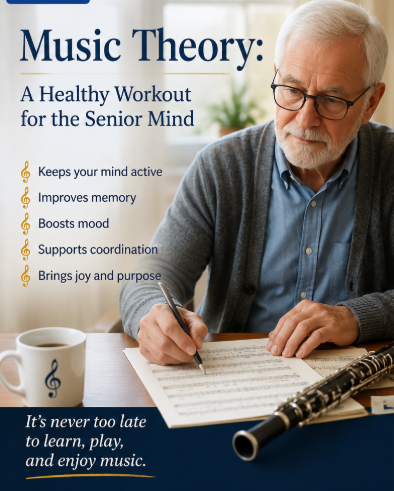
Music is often thought of as entertainment, but it can also be an enjoyable way to keep the mind active. For many older adults, learning a little music theory can become a rewarding lifelong hobby that exercises memory, attention, and problem-solving while bringing the satisfaction of making music.
What Is Music Theory?
Music theory is simply the language of music. It helps us understand how melodies, rhythms, scales, chords, and harmony work together. You do not need to become an expert or return to school. Learning a few concepts at a time can make playing an instrument or singing even more enjoyable.
Benefits for the Brain
Learning music theory encourages the brain to stay engaged. Reading notes, recognizing patterns, counting rhythms, and understanding chord progressions require concentration and mental flexibility. These activities stimulate many parts of the brain at the same time.
Many studies suggest that continued learning and mentally stimulating activities may help support healthy brain function as we grow older. While music theory is not a treatment for memory problems or dementia, it is one enjoyable way to challenge the mind.
Benefits for Physical Health
If you play an instrument, music theory naturally complements practice.
Playing a clarinet, saxophone, piano, or many other instruments can help improve finger coordination, posture, breathing, and fine motor skills. Woodwind instruments may also encourage good breath control and support healthy lung function for many people.
Regular practice also promotes consistency and patience. Even fifteen to thirty minutes a day can become a pleasant part of a healthy routine.
Emotional Well-Being
Music has a unique ability to lift our spirits. Learning something new brings a sense of accomplishment, and playing familiar songs often brings back pleasant memories.
Many seniors also find that music reduces stress and provides a welcome break from the demands of everyday life.
The Social Side of Music
Music is often shared with others. Community bands, church groups, senior center ensembles, and informal gatherings provide opportunities to meet people with similar interests.
Friendships formed through music can be just as valuable as the music itself.
Getting Started
You do not need expensive equipment or years of experience.
You might begin by:
* Learning to read the musical staff.
* Understanding major scales.
* Counting simple rhythms.
* Recognizing basic chords.
* Practicing a favorite song a little each day.
Small, steady steps often lead to lasting progress.
A Lifelong Journey
One of the joys of music is that there is always something new to discover. Whether you are picking up an instrument for the first time or returning after many years, every lesson is another opportunity to keep both your mind and body active.
It is never too late to enjoy learning.
Join the Connversation……..
I’d enjoy hearing from you. Do you play an instrument, sing, or would you like to learn? Please share your experience in the comments.
“This article is for general educational purposes and is not a substitute for professional medical advice. If you have questions about beginning a new physical activity or have health concerns, please consult your healthcare provider”.
You are invited to read the next my scheduled article for Sunday 8/9/2026
My Recent Publication:
I recently created a Large-Print “Seniors Medication & Health Tracker” designed to help seniors and caregivers stay organized.
Available on Payhip Keeping an updated medication list can be very helpful during doctors visits or emergencies.
https://payhip.com/SeniorMedicationHealthTrackerLargePrintPDF