Understanding Parkinson’s Disease
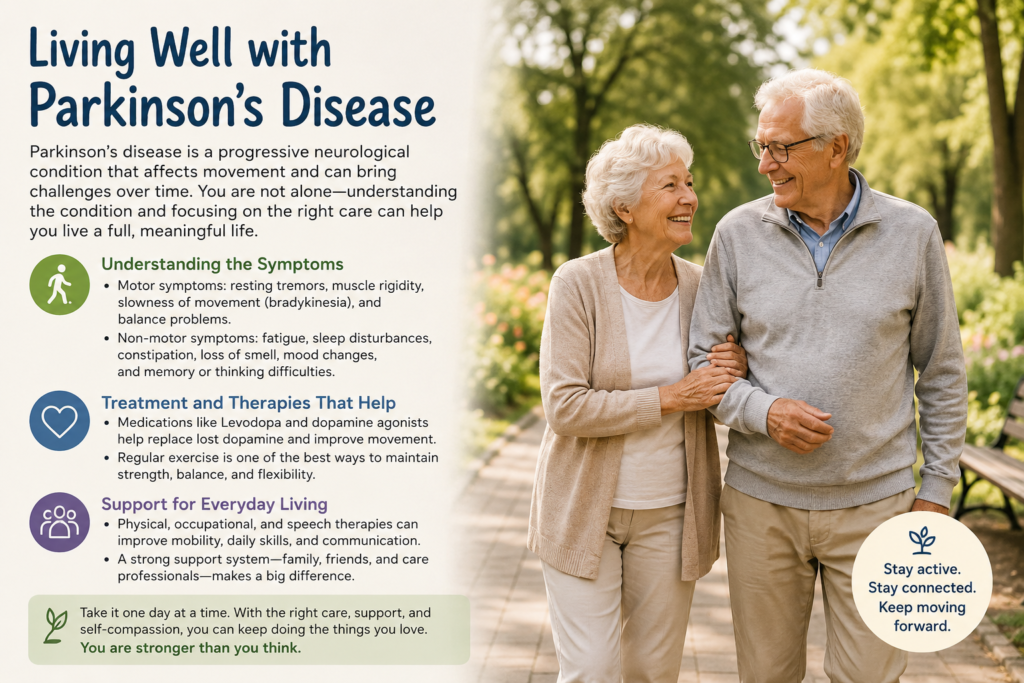
Living Well with Parkinson’s Disease Parkinson’s disease is a condition that affects many older adults. Although receiving this diagnosis can feel overwhelming, it is important to remember that many people with Parkinson’s continue to enjoy meaningful, active lives for many years. Learning about the condition and working closely with your healthcare team can make a real difference.
What is Parkinson’s Disease?
Parkinson’s disease is a progressive neurological disorder that mainly affects movement. It develops when certain nerve cells in the brain produce less dopamine, a chemical that helps control smooth, coordinated movement. Symptoms usually appear gradually and slowly change over time. While there is currently no cure, today’s treatments can often help people manage symptoms and maintain their independence.
Recognizing Common Symptonms
Parkinson’s affects everyone differently. Some people notice only mild symptoms at first. Movement (Motor) Symptoms
Resting tremor,often beginning in one hand
Muscle stiffness or rigidity
Slower movement (bradykinesia)
Smaller handwriting
Shuffling walk
Episodes where the feet seem to “freeze”
Difficulty with balance and posture
Soft or quieter speech
These symptoms are common and should be discussed with your healthcare provider.
How Does Parkinson’s Progress?
Parkinson’s usually develops slowly over many years. Symptoms often begin on one side of the body before gradually affecting both sides. The rate of progression varies from person to person. Some people experience only slow changes over many years, while others may notice faster progression. Regular medical follow-up allows treatments to be adjusted as your needs change. Treatment Can Help Although Parkinson’s cannot yet be cured, many effective treatments help control symptoms. Medications Medicines such as Levodopa and other dopamine-related medications help replace or improve the brain’s dopamine supply. These medications often improve movement, stiffness, and tremor. Your healthcare provider will recommend the treatment that is best for your situation.
Exercise Matters
One of the most important treatments is regular physical activity. Even simple daily activities such as walking, stretching, swimming, or chair exercises can be beneficial when approved by your healthcare provider. Therapy Can Preserve Independence Many seniors benefit from working with rehabilitation specialists. These may include: ● Physical therapy to improve strength, balance, and walking. ● Occupational therapy to make everyday activities easier and safer. ● Speech therapy to improve speaking and swallowing. These services often help people remain independent longer.
Don’t Forget Emotional Health
Living with Parkinson’s can affect both the individual and family members. Staying socially connected, maintaining hobbies, attending support groups, and talking openly about concerns can improve emotional well-being. Remember—you do not have to face Parkinson’s alone.
When Should You Call Your Doctor?
Contact your healthcare provider if you notice: ● New or worsening tremors ● Frequent falls or balance problems ● Difficulty swallowing ● Sudden confusion or hallucinations ● Medication no longer working as expected ● Significant depression or anxiety ● Any sudden change in your condition Early communication often leads to better symptom management.
A Final Thought
A diagnosis of Parkinson’s disease does not define who you are. With today’s medications, regular exercise, therapy, and support from family and healthcare professionals, many seniors continue to enjoy rewarding and active lives. Take one day at a time. Small, consistent steps can help you continue doing the things that matter most.
Join the conversation…..
What has worked for you or someone you know living with Parkinson’s disease? I’d appreciate hearing your experience or any helpful tips you would like to share.
I encourage open discussion in the comment section below.
This article is intended for general health education and should not replace medical advice. If you have questions about Parkinson’s disease or your health, please consult your healthcare provider.
You are invited to read the next my scheduled article for Sunday 8/2/2026
I recently created a Large-Print “Seniors Medication & Health Tracker” designed to help seniors and caregivers stay organized.
Available on Payhip Keeping an updated medication list can be very helpful during doctors visits or emergencies.
https://payhip.com/SeniorMedicationHealthTrackerLargePrintPDF